

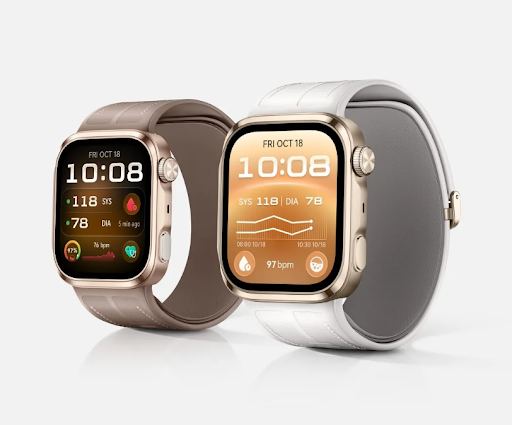
High blood pressure often affects generations. Parents who themselves suffer from elevated levels want to keep a watchful eye on their children and grandchildren. Adult children worry about their elderly parents who live alone. In all these cases, a gentle, ongoing form of support is desired – without restricting independence.
A modern blood pressure smartwatch can bridge this gap. Through a health community in the accompanying app, selected readings and alerts can be shared with trusted individuals. This isn’t surveillance, but rather informed care: the elderly person retains control over their data and decides what is shared and when.
The practical benefits become apparent in quiet moments: An unusually high resting heart rate, an abnormal blood pressure reading over several days, or a prolonged period of inactivity can be automatically reported to a trusted person. The family can then make a quick call, visit, or suggest a doctor’s appointment – without the need for a suspicious phone call every day.
This is especially valuable if the elderly person already knows that their blood pressure needs to be regulated. Regular readings are automatically recorded, and if there are any deviations, family members can see them early, before an acute situation develops. A specialist article describes why home blood pressure monitoring is so important, particularly for older people, and what role digital devices play in this process.
The consent of the person being monitored is always essential. Sharing data is a conscious decision that should be agreed upon in a conversation. A well-designed system specifies which alerts are sent to whom and who receives only a quiet weekly overview. This transparency prevents mistrust and preserves the dignity of all involved.
In the long run, it’s about a positive feeling for everyone involved: The elderly person remains independent in their own home, and the children are informed without having to constantly ask. This subtle form of care is precisely what modern wearables can provide – when used respectfully and thoughtfully.
The fears that adult children have about their elderly parents are often unfounded – but they are there nonetheless. A discreet, permanently available information system alleviates these fears without violating the parents’ privacy. Those who know that everything is alright are less likely to call anxiously for every little reason.
For older people themselves, this form of digital care is often a great relief. They don’t have to immediately interpret every symptom themselves, but can sleep on it and see the next day whether the reading has returned to normal. This relief in everyday life is often underestimated.
It remains crucial, however, that the elderly person retains control over their data. Every permission granted is a conscious decision that can be revoked. This fundamental principle of respectful digital care distinguishes meaningful support from unwanted surveillance – and that should be the goal in every family.
What’s particularly appealing is that this form of blood pressure measurement doesn’t require any expensive habits. Once you’ve found a suitable device, you can use it daily for years. There are no ongoing costs, and the data accumulates automatically.
Anyone who has read this far has already taken the most important step: raising awareness of the topic. Now it’s up to each individual to put that awareness into action – starting with a first, calm measurement on their own wrist.
The next measurement is just a button press away. Those who keep this in mind will eventually find that managing their blood pressure becomes second nature – and that is precisely the healthiest state in the long run.
Anyone who starts collecting regular data today will thank themselves in a year. They will then have a full year’s worth of data available, from which trends and changes can be reliably identified.
Technology is evolving, and the possibilities for everyday wrist-based blood pressure measurement will continue to grow in the coming years. It is already clear that those who benefit most are willing to wear the devices regularly and monitor their readings over an extended period.
Now is a good time to start taking regular measurements. Whether your readings have been unusually high or completely normal so far, a few weeks of consistent data on your wrist is always worthwhile. It forms the basis for conversations, decisions, and lifestyle changes that will have an impact for decades to come.
It’s remarkable how quickly wrist-based blood pressure measurement becomes second nature. What initially seems like an additional habit merges into everyday life after a while. It is precisely this naturalness that makes long-term data quality possible.
The combination of medically validated measurement technology, everyday-wearable design, and digital protocol makes the modern wristwatch a true advancement. It unites the best of classic measurement and digital convenience.
Last but not least, with each additional measurement, confidence in one’s own judgment also grows. Those who observe long enough learn to listen to their inner voice and interpret the data correctly. This combination of measurement and intuition is what truly helps in the long run.
Anyone who has read this far has already taken the most important step: raising awareness of the topic. Now it’s up to each individual to put that awareness into action – starting with a first, calm measurement on their own wrist.