

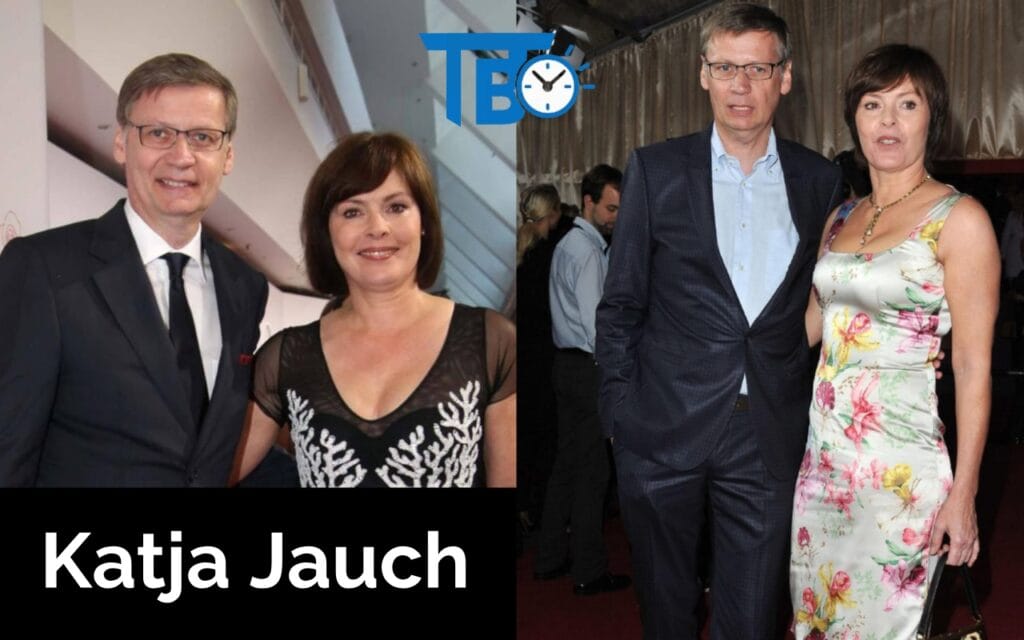
Wenn man im Internet nach „Katja Jauch“ sucht, tauchen sehr unterschiedliche Dinge auf: Hinweise auf die Familie des TV-Moderators Günther Jauch, aber auch Einträge aus der Stadt Schlieren in der Schweiz, wo eine Frau mit diesem Namen im Tiefbau arbeitet. Genau diese Mischung aus Bekanntheit und „unsichtbarer“ Alltagsarbeit finde ich persönlich spannend.
In diesem Text schaue ich mir vor allem die berufliche Seite von Katja Jauch an – als Projektleiterin Tiefbau in einer Schweizer Stadt. Ich versuche, in einfachen Worten zu erklären, was man über ihre Arbeit weiß, warum solche Berufe für unseren Alltag so wichtig sind und wie schnell es im Netz zu Verwechslungen kommen kann, wenn Menschen denselben Namen tragen. Dabei geht es mir weniger um Promi-Geschichten, sondern mehr um die stille, aber sehr wertvolle Arbeit im Hintergrund, die eine Stadt überhaupt erst lebenswert macht.
Who is Katja Jauch?
When people hear the name Katja Jauch , many immediately think of the well-known German television presenter Günther Jauch , as one of his adopted daughters also bears this name.
However, there is also a civil engineering expert in Switzerland with the same name: Katja Jauch, project manager for civil engineering at the city of Schlieren in the canton of Zurich. This duplication quickly leads to confusion online. A Google search for “Katja Jauch” reveals results relating to the TV presenter’s family, as well as entries from the Swiss city administration. This text focuses primarily on Katja Jauch as an engineer and project manager in civil engineering – that is, on her professional, publicly documented role.
It’s important to note that there’s very little reliable information about their private lives. This is something I personally respect greatly. Not everyone who appears in public registers wants to be a “public figure.” And that’s precisely why I’m focusing here on what is transparent and verifiable: their role, their work environment, and the significance of such professions for our daily lives.
Katja Jauch as project manager for civil engineering in Schlieren
Anyone who consults the official documents of the city of Schlieren will find Katja Jauch listed with the job title “Project Manager Civil Engineering” .
Her name, the address of the administration, and contact information are listed there. This makes it clear: she works in the area of municipal infrastructure – that is, on projects that we use every day without giving them much thought.
As a project manager for civil engineering, she is part of the city’s civil engineering/construction and planning department . This department typically deals with roads, squares, utility lines (water, gas, sewage), footpaths, and sometimes also with traffic safety measures.
The job is more technical and organizational than “media-friendly,” but extremely important for a city.
Anyone who has ever dealt with a city administration – whether it’s about roadworks in front of their house or a new 30 km/h speed limit zone – realizes that behind every measure there is someone who plans, reviews, coordinates, and ultimately bears the responsibility. It is precisely at this interface that a person like Katja Jauch works.
What exactly does a project manager in civil engineering do?
Before understanding why Katja Jauch’s role is important, one should first understand what civil engineering actually means. Civil engineering is the part of construction that takes place “below ground”: roads, canals, pipes, retaining walls, drainage, and often also squares and outdoor facilities.
Typical tasks of a project manager for civil engineering in a city like Schlieren might include:
- Planning of street and square reconstructions
– e.g. new surfaces, better crossings for pedestrians, cycle paths, bus stops. - Coordination of utility lines
– water pipes, sewage canals, gas, electricity or fiber optic cables that lie in the ground. - Tendering and construction management
– obtaining, comparing, awarding, and subsequently monitoring the execution of bids from engineering firms and construction companies.
From a professional perspective, this requires not only technical knowledge but also considerable organizational talent. On a construction site , city administration, planning offices, construction companies, residents, businesses, public transport operators , and sometimes even politicians all come together. A project manager like Katja Jauch navigates precisely this complex environment.
The example of the “meeting zone at the train station” in Schlieren
One specific project in which Katja Jauch’s name appears is the “Meeting Zone at the Train Station (2021–2025)” in Schlieren. In the city’s documents, she is explicitly listed there as the project manager for civil engineering and the contact person .
In Switzerland, a “shared space zone” is a traffic-calmed area where pedestrians, cyclists, and cars share the space – with reduced speed and clear design rules. The aim is greater safety, less hectic activity, and a higher quality of life around the train station.
Such projects are challenging because they pursue several goals simultaneously:
- Safety: Fewer accidents, clearer routes, better visibility.
- Comfort: Wider walkways, seating, more space for waiting or changing trains.
- Design: Pleasant materials, trees, lighting – a place where one likes to spend time.
From a planning perspective, the area around a train station is always a sensitive one: many people, different modes of transport, and sometimes limited space. A civil engineering project manager here not only has to read plans and keep budgets under control, but also consider residents, businesses, commuters, and the ongoing traffic . My research on similar projects often shows how complex coordinating with all stakeholders can be – and this kind of coordination is part of the daily routine in such a role.
Risk of confusion: Katja Jauch and Günther Jauch
If you search for “Katja Jauch” on the internet, you will also come across a completely different context: Günther Jauch , the well-known presenter of “Who Wants to Be a Millionaire?” and other TV formats, has adopted two daughters together with his wife – one of whom is also named Katja.
Media reports about the Jauch family occasionally mention this adopted daughter, usually in relation to privacy issues and the press’s treatment of a celebrity’s children. Some articles even address legal disputes surrounding the use of her name and her personal rights. (The details of this are beyond the scope of this text; the important point is that there is another “Katja Jauch issue” here.)
The crucial point is:
there is no reliable, publicly available evidence that the project manager for civil engineering in Schlieren and Günther Jauch’s adopted daughter are the same person. The sources I found treat this information separately.
- Swiss national Katja Jauch appears in administrative and professional registers .
- Günther Jauch’s daughter appears in biographical information about the presenter .
Especially in the online world, it’s crucial to clearly distinguish between such names. Otherwise, false stories can quickly spread – usually not out of malice, but due to ignorance. Therefore, a conscious and careful approach to names and identities is a form of digital responsibility.
Why people like Katja Jauch are so important for cities
When we talk about cities, we usually think of the visible things: tall buildings, shopping streets, parks, perhaps a famous town hall or church. But the everyday life of a city functions primarily through things that we don’t constantly notice – or that seem so commonplace that we no longer even pay attention to them.
This includes:
- Roads where you can drive and walk without tripping over potholes.
- Footpaths and squares that are not completely underwater even when it rains.
- Pipes through which clean water comes and dirty water disappears.
- Safe crossings at train stations, intersections and bus stops.
This is precisely where project managers in civil engineering work . They are a kind of “invisible director” of the infrastructure. In Katja Jauch’s case, this means that her projects contribute to Schlieren functioning well as a city and to making people feel safer and more comfortable in public spaces.
From a professional perspective, such a role is also exciting. It combines technical knowledge (materials, standards, drainage, structural engineering) with social issues (how do people move? What do vulnerable road users need?) and business requirements (budget, deadlines, tenders). It is therefore a very interdisciplinary profession in which one continuously learns.
A look at the working methods in civil engineering – from a professional perspective
Looking at various civil engineering projects in DACH cities, a typical process emerges, which is likely to be similar for Katja Jauch and her projects:
- Analysis of the initial situation
: The current condition of the street or square is examined. Where are there problems – accident hotspots, poor drainage, barriers for people with disabilities, traffic bottlenecks? - Preliminary project and feasibility study
: Several solution options are being developed. Each option has different advantages and disadvantages: costs, interventions, impact on traffic, design. - Planning, permitting and tendering:
The chosen option is planned in detail. This is followed by internal and external approvals, e.g., from political bodies. Subsequently, construction services are tendered and awarded. - Construction Phase and Communication:
During the construction period, traffic diversions must be set up, residents informed, and problems on site resolved. This demonstrates the importance of calm, structured project management. - Finalization, acceptance, and follow-up review
: At the end, it is checked: Was everything built as planned? Does the new solution work in everyday use? Is there any feedback from the public?
Anyone who takes a closer look at this process – for example in project descriptions such as the meeting zone at the train station in Schlieren – quickly understands how much precision, teamwork and patience is needed to create a seemingly “simple” place in the end.
What you can learn from Katja Jauch for your own career
Even though we know hardly any details about Katja Jauch’s personal career, some things can be deduced from her current position that may be interesting for others.
1. Technical competence plus responsibility.
Those who become project managers in civil engineering generally need a solid technical education – for example, through a construction school or a degree in civil engineering – and then gain practical experience.
The combination of specialist knowledge and a willingness to take on responsibility is in demand in many professions, not just in construction.
2. Working in Public Service:
A position with a city or municipality means working directly for the public . This has two sides: You are obligated to handle taxpayers’ money carefully, but you also see very directly how your own projects can improve people’s lives.
3. Quiet in the background instead of the limelight.
Unlike media personalities, someone like Katja Jauch is rarely in the spotlight. Many professionals consciously choose this “quieter visibility.” They prefer to implement sustainable projects rather than appear on television – and that, too, is a valuable, self-assured decision.
Young people who are considering whether a technical or municipal profession might be right for them should definitely see such paths as an attractive alternative : less glamour, but a lot of influence on the everyday lives of many people.
LESEN SIE AUCH: Ayana Haley Hall Soost: Leben, Familie und Zukunft in Berlin
Conclusion: Katja Jauch as an example of quiet but important work
In the end, we are left with the image of a woman about whose private life we know little – and that’s okay. What we do know:
Katja Jauch works as a project manager for civil engineering at the city of Schlieren and is involved in projects such as the pedestrian zone at the train station.
She is representative of the many skilled professionals who make cities plannable, safe, and livable , without their names constantly appearing in the media. In a world where visibility is often mistaken for importance, this reminds us that true impact often happens behind the scenes.
So , if someone hears the name “Katja Jauch” in the future, it’s worth pausing for a moment:
Not only does the family of a famous presenter bear this name, but also an expert who works with a steady hand on the infrastructure of a Swiss city – and thus helps shape a small but very concrete piece of the future.